"De-shadowing the Economy: New Trends 2026 – Retail, Construction, Electronics, and Security Services."
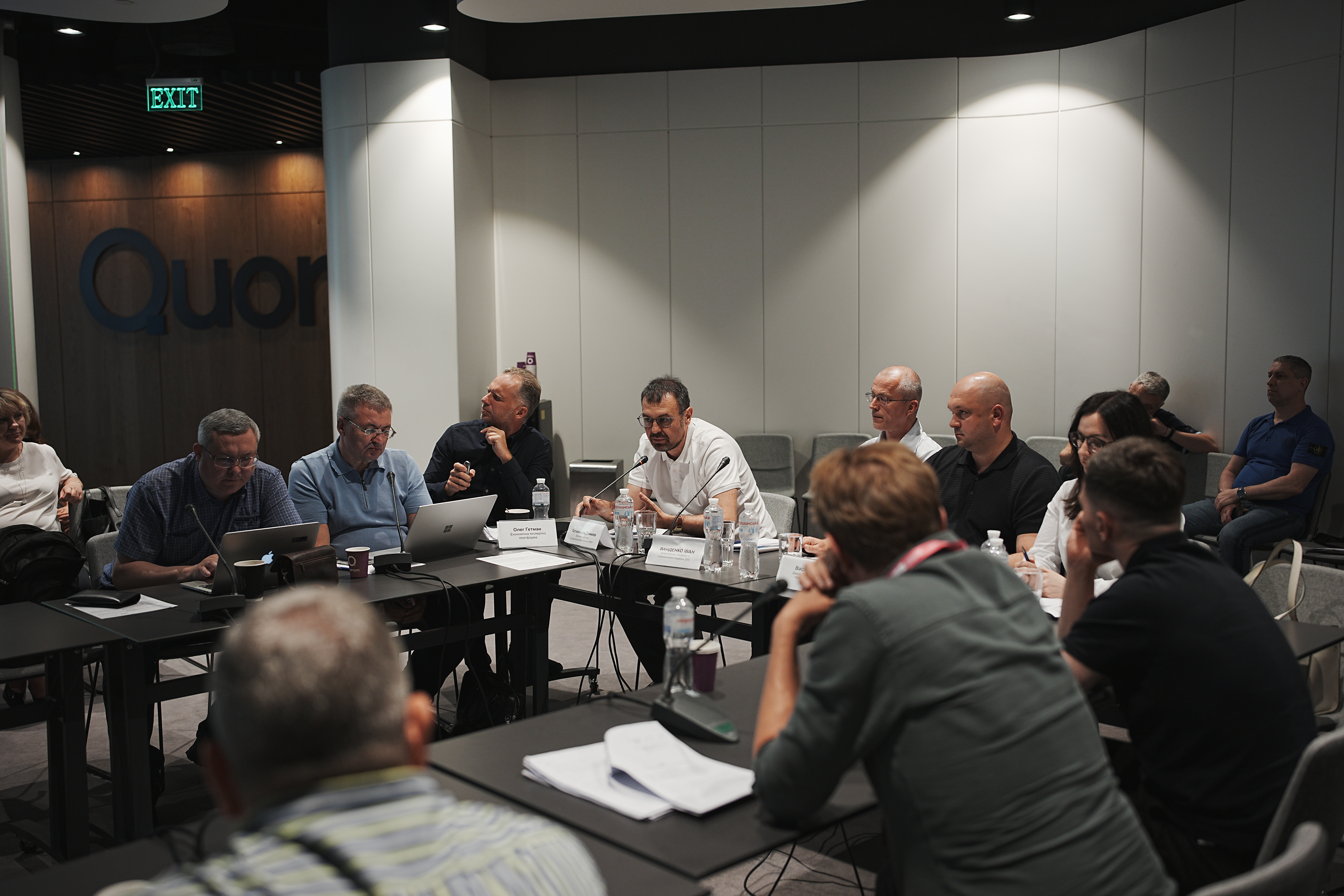
VARES Association took part in the conference “Legalization of the Shadow Economy — New Trends 2026: Retail, Construction, Electronics, and Security.”
During the event, participants discussed key challenges for business and the state, including business fragmentation, differences in official wage levels, trade-related issues, changes in illegal markets in 2025–2026, and instruments for reducing the shadow sector in the economy.
Special attention was paid to the issue of artificial business fragmentation. Oksana Zhurieva, a tax policy expert, emphasized the need to define clear criteria that would make it possible to identify signs of such fragmentation.
Among the possible criteria discussed were family or economic ties between entities, a shared address, a single decision-making center, interdependence in supply chains, and the use of shared resources or IP addresses for filing reports.
Yefrem Lashchuk, legal policy expert at the Economic Expert Platform, presented data on non-food retail. According to the estimates presented, budget losses from the largest shadow economy schemes amount to UAH 429–543 billion per year. The largest share of these losses is linked to undeclared work and “envelope wages” — UAH 200–265 billion.
It was also noted that undeclared work remains a particularly acute problem in certain sectors. In particular, in the security industry, around 90% of market participants do not officially employ their workers.
Mykhailo Poliakov, Deputy General Director for Corporate Affairs at Philip Morris Ukraine, raised the issue of the quality of eExcise implementation. The discussion focused on the fact that an insufficiently prepared launch of the system could create risks both for business and for budget revenues.
Summing up the conference, Danylo Hetmantsev emphasized that countering the shadow economy should not be limited to creating new formal rules, but should primarily focus on their practical enforcement. In this process, the systematic work of the State Tax Service and the Bureau of Economic Security is essential.
It was also noted that grey-market producers and networks must understand that the point of no return has already been passed, and that further changes, even if difficult, are inevitable.
A separate point was made regarding the electronic cigarettes market: given the high share of the illegal segment, it is important not only to discuss the problem, but also to create conditions under which businesses can operate legally.
In his closing remarks, Oleh Hetman noted that the presented rankings, charts, and analytical materials would be forwarded to Danylo Hetmantsev for further work. He also separately emphasized the need to continue the discussion of the draft law on countering artificial business fragmentation.
During the conference, Andrii Solomin, Head of VARES Association, presented an analysis of the electronic cigarettes market and a forecast of tax revenues for 2026.
VARES’ key position is that it is now important not to lose the moment when the legal segment of the market can still be strengthened.
We thank the Ukrainian Business Council for organizing the conference and for the opportunity to contribute to a professional discussion.